Meet the Schwa: The Most Overlooked Sound That Makes English Flow
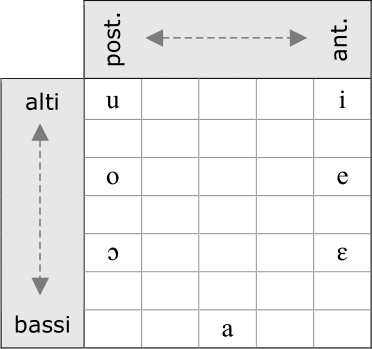
Photo: Anvalon, CC BY-SA 4.0, via Wikimedia Commons
If someone told you there was a single sound that appears in nearly every sentence a native English speaker utters, you'd probably want to learn it immediately, right? Well, here it is: the schwa. Represented in phonetic notation as ə, it sounds like a soft, lazy "uh" — like the sound you make when you're thinking of what to say next. It's quick, unstressed, and almost throwaway. And it's absolutely everywhere.
Here's the wild part: most English learners have spent years studying vocabulary, grammar, and even pronunciation — and they've never once been taught the schwa. That gap is often exactly what separates someone who sounds fluent from someone who sounds like they're reading off a script.
What Exactly Is the Schwa?
The schwa is what linguists call a mid-central vowel. In plain English, that means your mouth is relaxed, your tongue sits in a neutral position, and you produce a short, unstressed sound that doesn't lean toward any particular vowel. It's not quite an "ah," not quite an "ih," and not quite an "uh" — it's somewhere in the middle of all of them.
You'll find the schwa hiding inside common words you use every day:
- about → uh-BOUT (that first syllable? schwa)
- problem → PROB-ləm (the final syllable? schwa)
- banana → buh-NAN-uh (both the first and last syllables? schwa)
- America → uh-MER-ih-kuh (first and last syllables? schwa again)
Notice anything? The schwa shows up in unstressed syllables — the ones your mouth kind of glides over on the way to the syllable that actually carries the emphasis. Native speakers don't think about this consciously. They just do it. But if you're not doing it, your speech can end up sounding robotic, over-enunciated, or just... off.
Why Over-Pronunciation Is a Real Problem
When learners try to sound clear and correct, a common instinct is to pronounce every syllable fully and carefully. The intention is great. The result, unfortunately, is what linguists sometimes call over-pronunciation — giving every vowel its full, dictionary-entry sound even when native speakers would reduce it.
Take the word "support." The correct pronunciation is suh-PORT, where that first syllable is a quick, soft schwa. If you say SOO-port or SAH-port, native speakers will understand you — but it'll sound slightly unnatural. Now multiply that across an entire conversation, and the cumulative effect is speech that sounds stiff and effortful, even if every individual word is technically correct.
The schwa is actually a feature of natural English rhythm, not a flaw. English is a stress-timed language, meaning the rhythm is driven by stressed syllables, with unstressed syllables compressed to fit in between. The schwa is how English achieves that rhythm. Without it, the natural beat of the language falls apart.
Where to Find Schwas in the Wild
Once you start listening for the schwa, you'll hear it constantly. Here are some of the most common places it appears:
In unstressed syllables of multi-syllable words:
- lesson → LES-ən
- button → BUT-ən
- open → OH-pən
In small function words when spoken at normal speed: Articles, prepositions, and conjunctions almost always get reduced in real speech.
- a → just "uh" ("I need uh minute")
- the → "thuh" before consonants ("thuh store")
- and → "ənd" or even just "ən"
- for → "fər" in casual speech
- of → "əv" ("a cup əv coffee")
This is why phrases like "a cup of coffee" sound like "uh cup əv coffee" when Americans say them naturally. No one is being lazy — this is just how English rhythm actually works.
Practical Exercises to Build Your Schwa
Knowing about the schwa is one thing. Getting it into your muscle memory is another. Try these exercises:
Exercise 1: The Relaxed Jaw Drill Drop your jaw slightly, relax your lips, and say "uh" — not long and drawn out, but quick and light. That's your schwa baseline. Practice saying it until it feels effortless. This is the sound you're aiming for in unstressed syllables.
Exercise 2: Word Reduction Practice Take these words and practice saying the unstressed syllables with a schwa instead of their "full" vowel sounds:
- family → FAM-ə-lee
- comfortable → KUM-fər-tə-bəl
- camera → KAM-ər-ə
- history → HIS-tər-ee
Say each word slowly at first to identify the schwas, then gradually speed up until it sounds natural.
Exercise 3: Function Word Reduction in Sentences Read this sentence aloud, first with every word fully pronounced, then with function words reduced: "I want to go to the store and get a cup of coffee."
Reduced version: "I wanna go tə thə store ən get ə cup əv coffee."
Hear the difference? The second version sounds like something a real person would say on a Saturday morning. That's the goal.
Exercise 4: Listen and Shadow Pick a podcast, YouTube video, or TV show with American English speakers. Listen closely to how unstressed syllables are handled. Then try to shadow — speak along with the audio, matching rhythm and reduction patterns. This trains your ear and your mouth simultaneously.
The Confidence Factor
Here's something worth saying out loud: embracing the schwa isn't about sounding less educated or less precise. It's about sounding like a fluent, natural English speaker. Native speakers across all education levels, professional backgrounds, and regions use the schwa constantly. A doctor giving a diagnosis uses it. A CEO in a boardroom uses it. A professor delivering a lecture uses it.
When you allow unstressed syllables to soften into schwas, your speech gains a natural flow that makes it easier for listeners to follow along. Ironically, reducing certain sounds actually makes you easier to understand — because your speech matches the rhythmic patterns English speakers' brains are wired to process.
Start Small, Sound Different
You don't need to overhaul your entire pronunciation approach overnight. Start by picking two or three words you use constantly and practicing them with proper schwa reductions. Notice how they sound compared to your old pronunciation. Then gradually expand your awareness to function words in everyday sentences.
The schwa won't make headlines. It's not dramatic. But it might be the single most effective adjustment you can make to sound more natural in English — and once you start hearing it, you'll never stop noticing it.